by The Chronic Chronicles | Jan 9, 2012 | Hospitals
Today is finally the day I go into hospital for Intensive Rehabilitation. It’s a multidisciplinary affair, so lots of people try and help you all at once over the three weeks, instead of the normal few physiotherapy sessions here, a nurse visit there which doesn’t tend to work.
I wake up at the hotel at 6.20am. We’ve been here twice before as it’s close to the hospital, and will be here each Sunday night. It’s the first of my early starts of week, and I feel sick and exhausted. Breakfast is at 7am and I need to eat something, despite the way I feel, as it’s going to be a long day.
Traffic is bad on the way to the hospital and I begin to worry. We arrive at about 8.15 after being told to arrive at 8.30 and a nurse shows me to my bed – which is on a sectioned bit of the rehab ward, opposite another 24 year old with very similar conditions to me, who has had it for two years.
We’re kind of left to it. I have four small drawers – the top one has a lock, which I’m glad for so I can put my valuables. There is a higher cupboard next to it for some clothes. I find out since I had the introduction the hospital has put in WiFi, so I pay for a month and am very relieved!
The female ward
A nurse then tells me I need to put all my medication into my drawer with nothing else so they can lock it. I need to ask every time I need my medication. I understand why, but find it frustrating as it means I have to remember before every possible session whether I need to collect my painkillers. I also feel like a bit of a child. “Please nurse, can I have my medicine?”
The first session is a Welcome Session, which just goes over the basics. There is one man on the programme, and four other women. Three of us have Ehlers-Danlos Syndrome, which is nice – I’ve not met anyone else with it. They tell us you must attend all sessions. The different teams are Physiotherapists, Occupational Therapists, Consultants, Health Psychology and nurses. Our timetables look a little sparse at the moment – but we’re told our individual sessions still need to go in, and we will have one-to-one physio daily. I see we only have one swimming session a week timetabled in and am disappointed, as I love swimming and don’t often get the opportunity. We’re told if the physio agrees you can have access to the pool and gym alone. I write it on the back of my hand so I don’t forget to ask the physio this afternoon!
A nurse nabs me for a blood pressure test, just as the health psychologist arrives for our session. He asks that the nurse does it afterwards. I HATE blood pressure tests as I find them incredibly painful, so I’m relieved. I hope to get away with it!
We have the session with the Health Psychologist. He goes over behaviour and how we act to one another. He says they often have problems with two people on the female ward falling out. On the male ward they often get two men competing and pushing themselves too far. Afterwards I request some sessions with a psychologist.
Finally, it’s lunch time. Today they just bring out sandwiches, and some fruit juices. Someone grabs the only apple juice, which leaves the orange I’m allergic too, or pineapple. I take the pineapple, and find it causes a reaction anyway. I ask the catering lady whether she can put aside an apple juice for me in future, but she doesn’t seem to grasp my request due to a language barrier. I consider it lucky my allergy is not life-threatening, just an annoying asthma attack.
The nurse pounces on me after lunch for the blood pressure test – damn. Then he says he needs to do it twice as I have Postural Orthostatic Tachycardia Syndrome. My arm throbs for ages after.
We have free time afterwards, with my first Physio and Occupational Therapist (OT) session at 2pm. I have a porter booked, although I can use my chair to get there to show me the way. I am told he will be there at 1.50. Luckily I decide to get dressed early, as he turns up at 1.25. I have a panic over getting the wheelchair to work, before I find the stray plug that’s come out.
My physio and OT are both nice. They both seem the type I could say if I wasn’t comfortable with. The OT says she wants to discuss my problems at work in-depth. I ask the Physio for permission for using the pool by myself and she says of course. She asks me to wait for my first session on Wednesday, to ease me into the first couple of days, and then I will be free any time. It’s heated – yay!
My final session of the day is Pacing. It’s all about finding your baseline level – which should never be measured in pain, but in time, distance of number of activities. So taking housework as an example, if you can just about dust one room then your pain increases, you should dust half a room at a time. When you’ve done that for awhile and feel comfortable, you should add 10% to that. Again, get comfortable with this – and try and add a bit more.
I think it’s something most people with chronic pain do – break tasks down to manageable levels, although many stop when it actually hurts rather than before which I suppose is key.
I just find it quite impracticable for day to day life. You can’t do it as work properly, or avoid things that hurt all the time. The one guy on the programme said he doesn’t have constant pain as such, but very intense short bursts in certain positions. Uneven ground causes his foot to go into that position. However, you can’t avoid it all your life. Sometimes you need to go to a hospital, GP, wedding, friend’s house – anything! You can’t just say no, there is an uneven floor.
The food for our evening meal was very mixed. I had a lasagne, which was okay. Edible. Others had congealed pasta, rice pudding with a skin on it, and other lovely things!
The one man on the programme asked at pretty much every meeting where he could get takeaways from, and how to get to the nearest restaurant. I kind of get his point. Hospital food may be better than it used to be, but I started struggling for options when choosing for day two – so in three weeks I won’t be impressed!
It went very downhill come night time. I was very tired, so decided to get an early night – which I thought would also help come morning. Mum had bought me an eye mask and earplugs, as I have been terrified about not sleeping. I really struggle to sleep unless it’s pitch black, and totally silent. Even so I figured it wouldn’t be that bad. The girl in the bed opposite was snoring so loudly the whole next section could hear her, although she was nothing compared to the noise from the rest of the ward. They had no concept of talking quieter come night time, even when people started drawing their curtain to sleep. Others had on films. The lights were really bright. I turned off the light in our section, so that became not too bad with the mask on, but my earplugs barely blocked anything. People were going in and out of the doors to the toilet and letting them slam shut.
I was finally drifting off to sleep when a nurse pulled back my curtain, making me jump. She informed me she was on night duty, and to let her know if I needed anything. I had clearly taken my eyemask/ear plugs out, so she must have known I was asleep. I mumbled I didn’t, but thanks, and was just drifting off again when again she opened my curtain again and asked if she could photocopy my timetable. I said yes, then asked if she was going to wake us up every night. She seemed surprised, and she said wouldn’t.
Not taking this massive hint, twenty minutes later my curtain opens again and she brings it back, again, without any concept of quietness. Why an earth would they decide they needed copies of something they gave us is in the first place when we’re asleep?!
Overall, a slow, tiring day, with not a lot done. Just lots of introductions, and assessments. The hard work starts tomorrow.

by The Chronic Chronicles | Jan 6, 2012 | Opinion
I found out today that a group of people in Darlington have brought legal action against Arriva bus company for disability discrimination.
The buses have been refusing to allow people in wheelchairs on because pushchairs are there; not putting the ramp down for them; telling them they will be too heavy for the ramp; not stopping for them; or giving them abuse for trying.
In one case a young man waited in the snow for the last bus of the evening, which refused to let him on. When he started to challenge it, the bus driver turned round to the passengers and told them if they let him on the battery on his chair could explode.
Credit to Michal Zacharzewski
Pushchairs do NOT have priority. I know it’s not easy, but parents should fold their pushchair should a wheelchair need the space, as a disabled person can’t jump out of their chair and the wide space is put in specifically for disabled access, not for prams. (The exception is of course if either the child or parent is disabled themselves and so cannot do this.)
Lothian buses in Edinburgh have actually now banned non-foldable buggies (prams) and insist on them actually being folded if they get on. I can’t say I like the thought of people being left at a stop in any case, however hopefully once the policy is known about, people will make sure they purchase a foldable chair.
Certainly buses should be doing all they can to make themselves accessible for people with disabilities. Good on Darlington Association on Disability and Unity Law for fighting it!

by The Chronic Chronicles | Jan 3, 2012 | Hospitals
Next week I am going into hospital for three weeks, for intensive rehabilitation and pain management.
My Ehlers-Danlos Consultant recommended it and I’ve been on the waiting list for a year. Traditional pain management can be quite sporadic – a session of physio here, looking at medication there and seeing a therapist when it all gets too much a few years later – but on the programme they try and cover everything in the three weeks. They even have craft and gardening sessions as additional sessions.
I’m half excited, half terrified – although the scared bit is about all manner of stupid things. I’m looking forward to learning the proper way to exercise that doesn’t cause damage to my joints, and spending time with people like me. Someone I know with Fibromyalgia went on a similar programme and can now stand longer, and has reduced her medication. So I’m hopeful.
However, the thing I’m worried about most? Sleep. I know, I know, it’s pathetic. But sleep to me is one of the most important things in the world. Because of my exhaustion, I tend to sleep for a long, long time – 12 hours or so, even if it’s not all great quality sleep. My room needs to be pitch black, and completely silent – no clocks allowed, lights covered up. I wake easily, and if I don’t get those 12 hour sleep – I’m a mess. I haven’t been up early, except on a rare occasion since July, when I had to go onto sick-leave, and the programme requires 7am starts. The thought makes me feel sick, because when I get that tired – I struggle to concentrate and my energy depletes, and this is my one chance to try my hardest to get better.
My lovely mum has bought me earplugs and a sleep mask to try and help with the noise/light, but I’m not sure I can sleep with earplugs as they make me feel very vulnerable. But it’s worth a go! My other big worry is about pain. I pay for two treatments a week from a McTimony Chiropractor who also does deep tissue massage. It has been the only thing to ever help with pain relief. And I have to give it up for three weeks. What if I can’t do anything as everything hurts too much? When the pain gets that bad I can’t concentrate, and focus on things. I also hope I’m not going to be the only younger one there – which isn’t a big deal, I suppose – but it’s always nice when you feel a less of an anomaly.
So they are my worries. I hope they are silly and come to nothing, and I really hope this is the start of something really positive. This year I wish to have condition improve lose weight, and get a job I love. That would be a perfect year.
Hope. Credit to Robert Michie

by The Chronic Chronicles | Dec 11, 2011 | Diagnosis, Doctors
This month makes it a year since I was finally diagnosed, and brings me up to nine and a half years since my symptoms began.
My lower back has been getting worse and worse, and I believe is the cause for me not being able to stand up long. I went to see my GP and said that I would like to have an updated MRI. My previous MRI in 2009 showed three or four slipped discs, facet degeneration and arthritis. And at that point I could be on my feet for about 15 minutes. I’m now down to under a minute (or so, depending on the day. Sometimes it’s far less, sometimes a bit more if I push myself and ignore the pain.)
My GP said she didn’t have the power to order an MRI unless I was having an operation or something. She asked me when the last time I saw a spinal specialist was, and I said i hadn’t ever. I’ve seen plenty of Rheumatologists and Pain Consultants, but that’s it. She said there was an NHS scheme set up called the Spinal Pathway, and she rolled her eyes and said what a ridiculous name it was. It was for people who had long-term back pain, who hadn’t been able to be helped by their GP. They would assess me – probably by a physiotherapist, and then hopefully send me on for an MRI or to the consultant. Well, that was the plan.
To be honest, as soon as she said a physio was assessing me my heart sunk. I don’t mean to be negative about a whole profession – I know there are good ones out there. It’s just I personally haven’t had a beneficial relationship with one, and I’ve seen many. A physiotherapist was the first person I was sent to when my neck pain started when I was 15. My experience with her was poor. She strapped me up with one of those long brown rolls of plaster you would normally cut to the size of you wound, you know the ones? She cut two strips, long enough to make a massive cross on my back. Her theory was my problems were all due to posture, and when I didn’t sit up straight the plaster would pull and ‘remind me’. After three hellish days, I’d had enough. You know that pain when you pull a plaster off your knee? You either ease it off and make it last longer, or be brave and rip it off. Have you ever had to pull plasters off the length of your back?
I have seen senior physiotherapists, and junior. Spinal Scope ones, and Rheumatological experts. All have given me similar exercise sheets, sometimes done a bit of ultrasound – then when I hadn’t improved in a few visits sent me away saying there is nothing more they can do.
So, when my GP says I need to see yet another physiotherapist in order to see a Spinal Specialist Consultant, I’m not particularly hopeful. In the assessment with the Physio says he doesn’t think it’s that bad as the pain isn’t constant. This isn’t true. I’m just told him it has been constant for nine and a half years. He decides if it was disc problems, the pain would go down my legs. I then ask him for an MRI as we’re not quite sure what the problem is, but he says an MRI should only back up what is found in a physical exam. I fully admit I’m not a doctor – but I guess I just don’t see what looking at me tells him. I then ask about the injections and he declares that I don’t seem to be screaming out in pain for them. This pretty much guts me – who an earth can you possibly tell the amount of pain someone is in? To be frank – I’m offended, and upset.
So I ask if I can see the consultant, and he responds that only 3% of people on the Pathway get to see the consultant. He then puts forward his plan of action. Can you guess?
Physiotherapy.
I’m going into Stanmore for three weeks in January which will include working with a physiotherapist, so I turned his kind offer down. I think I’m going to submit a letter of complaint about his experience. His whole attitude screamed dismissal from the moment I stepped in, and saying I wasn’t screaming out in pain so wasn’t going to offer treatment? It just makes me want to cry.

by The Chronic Chronicles | Nov 11, 2011 | Daily Life, Hobbies
I first got into crafting about two years ago, by making cards. Someone had suggested to me as they’d found a good distraction from their pain. I soon found I enjoyed it, but wasn’t very good at it. I then gave jewellery go and loved it. Eventually I started selling to friends and family, and sell extras at my website www.sparklyplace.co.uk. I don’t make anything from it – just enough to let me replace beads and findings.
Over time I have found a lot of disabled people are also into crafting of different types. It’s not surprising; it’s very relaxing and has other benefits. It gives you pride in something you’ve accomplished, and most importantly – it does give a distraction from pain. It doesn’t make it go away, but anything that concentrates your brain and means you aren’t therefore focusing on whatever is hurting.
At school my art teachers told me to my face I was terrible; my stick figures run screaming in terror, and I was always envious of my friend’s creations. While I’ve always enjoyed writing, I didn’t feel I had a creative bone in my body.
I’ve since realised there are lots of ways to be creative, and my art teachers shouldn’t have been so narrow minded. If I picked up a paintbrush, the results wouldn’t be pretty, but I can design and create a piece of jewellery.
There are some downsides. Crafting is expensive and can be very addictive. I, along with many others, find more time is spent buying pretty beads than actually making. I spend lots of evenings on eBay and bead websites, and then gulp when it comes to paying the bill! I have then spent a fortune on storage for all the bits and bobs I’ve purchased.
There are lots of things I’d love to try, but starting a new hobby is a huge outlay, and it’s difficult to try something out without signing up to expensive classes. I’d love to give pottery a go, glass etching and working with wood. I’d like to make my own beads, stamp metal and learn how to work with polymer clay. One day, I hope! I have just purchased a photography class on Groupon – with the idea of learning how to take better photos of my jewellery.
One particular joy I have found is creating awareness jewellery for various rarer conditions/disabilities. Anyone can find a pink stretchy bracelet for Breast Cancer, but when you have a condition not many people have heard of, then there is an appreciation for buying a handmade bracelet to spread awareness or to commemorate a diagnosis. While I do charity auctions, I just don’t make enough to be able to donate to the charities each time which is a future aspiration. I do supply the Charcot Marie Tooth Disease website with awareness bracelets, and I’d love to be able to do more of that.
If you haven’t crafted before, please do pick something that takes your fancy and give it go. The cheapest craft I’ve found is a colouring in book. Hey, it totally counts!
Credit to raymortim

by The Chronic Chronicles | Nov 10, 2011 | Coping Methods, Daily Life
I would say sleep is pretty important to most people, but when it comes to chronically ill people – good sleep is like gold dust. A rare and a magnificent thing (if gold dust is particularly magnificent?). Sleep becomes difficult with a lot of conditions, whether they can’t sleep, don’t sleep well, find it difficult to sleep due to pain, or sleep way too long.
My sleep pattern is all over the place. It’s often a few hours interrupted by pain, often not getting to sleep until 4:00-5:00am. Then I’m falling asleep throughout the day as I didn’t get a good enough sleep. Then every week or so I’ll sleep far too long – sometimes 16+ hours but still don’t reach that final deep stage of sleep – so I wake feeling unrefreshed.
I often have bouts of insomnia where I’m awake all night, and a mess during the day. Insomnia is something I wouldn’t wish on my worst enemy. Whether it’s one night of sleeplessness, or much longer, it’s just horrible and when it happens to me, the fine line between being a bit of a wreck, and being in the gutter shatters, and I’m a cranky, exhausted, mess.
This happened inconveniently for the days running up a wedding at the weekend, and I spent the whole of the ceremony – pretty sure captured on camera as well, desperately trying to keep my eyes open and mostly failing.
It usually causes splitting headaches, moodiness, and the inability to enjoy anything. Your bed becomes all you can think about, and the further away that elusive ‘collapse into bed’ moment is, the worse you feel.
During my teenage years, and culminating in total insomnia during my first year of university, I’ve tried to practise better ‘sleep hygiene’. I have rules, although I often break them! I put these rules together myself from bitter experience, but the Pain Clinic also teaches them.
1) First and most importantly, no sleeping during the day. If you really, really have to sleep because oh no, your eyes are closing and can’t stay awake any more – make sure it stays under an hour. Set an alarm. I tend to find sleeping during the day equals hours awake at night, even if the nap was only brief. This is an almost impossible one I break often, sadly. If you really do have to sleep – don’t use your bedroom due to rule 2.
2) Don’t relax in the bedroom or even read. It should be for sleeping only (and you know, that one other thing!), so your brain connects your bedroom to sleep. This does work; if I walk into my bedroom I usually feel a wave of tiredness. I want to try and get the best sleep I can in that room, so if I have to nap during the day I pick another room.
3) If you’re lying there wide awake – get up and do something. Having said this, if I’m in the tired but can’t fall asleep stage I will often stay in bed anyway. I use this time to drift off and daydream (or night dream?) as I feel this also benefits you. But if I’m wide awake I’ll leave the room and read. (Although I’ll often go on the computer which wakes me up more, so try not to do that!)
4) Turn the clock away from you. There is nothing worse than being unable to sleep, and watching the hours tick away. If you don’t know what time it is, I feel you don’t get into that oh god I must sleep panic so easily.
5) And final tip if you’re hardcore is to try and get a sleep routine. This one I believe would work, but I find it too hard to stick to. I find if I get up early when I don’t have something to do – I fall asleep against my will.
Credit to nioanto
Further rules on sleep hygiene can be found in this article here by Amber Merton.
by The Chronic Chronicles | Nov 8, 2011 | Opinion
The NHS is currently under threat from something called the ‘Health and Social Care Bill 2011’.
The bill will make many changes, including abolishing Primary Care Trusts (PCTs) and grouping together GP groups to run their area. While we hope GPs are making decisions based on the patient, they are much more likely to be influenced by finances under the changes. I also hope my GP is spending her time reading the latest research, keeping up to date with training and new medications, not budgeting for the local area. It will allow private companies to take over NHS hospitals, or the services that appeal to them and will stop the NHS being the comprehensive service it should be.
20% of the NHS budget will be spent on things like dealing with the contracts with private companies, advertising, the legal bits that go along with contracts, and a lot of other stuff that isn’t providing quality healthcare or trained staff. Many people will be made redundant – with payments having to be made, and those running the PCTs are likely to then be employed to be consultants to the GP groups.
The postcode lottery that already exists will become even more pronounced, with standards and range of care dependant on where you live. Hospitals will be able to treat more private patients, which seems okay in principle into you need the bed someone who can afford to pay for one is in.
It is one thing if you have an injury and go to A&E to be fixed, or you need a single operation like a knee replacement. The difficulty comes when people are chronically ill, such as myself. With these conditions come all sorts of problems, in different parts of the body, and there is no one specialist that can help me. At the moment my GP can refer me to a variety on consultants, and I currently see six consultants on a regular basis, in different parts of the country.
Under the new plans – the person I want to see may now be available only if I can afford to pay for it, which goes against the very philosophy of the NHS – free care, from cradle to grave.
Debates will be happening soon on Clause 4 of the NHS Bill, also known as the “hands-off clause.” It will completely change the way the minister’s duties towards the NHS, and mean they will only be able to stop something happening, or bring a change in, if they can demonstrate there was no other course of action. This isn’t very easy to do. The NHS is one of the most important issues for voters, and they are expecting ministers to try and take care of it – not sign a bill waiving away their responsibility. More information on this clause can be found here.
The government did not state in their manifesto they would be making these changes, and public support is largely against it, yet they seem to be pressing forward with them.
I’ve been trying to follow the 38 Degrees campaign, who have taken petitions to hundreds of MPs, including Nick Clegg, send thousands of emails, and are now asking people to ‘email a Baroness Lord’ at random to ask them to attend the debates. My pick is Baroness O’Neill, so I will be emailing her to tell her why I don’t support the bill.
You can do the same here.
Credit to Grafixar

by The Chronic Chronicles | Oct 13, 2011 | Daily Life
I haven’t updated in forever. There is a reason for this: I moved house!
We have desperately been searching for quite some time – half looking for a couple of years, and properly trying for a year.
We had a battle with the council who puts everyone into ‘bands’ and were banding me too low for my medical needs. This was detailed in the post When Those Who Are Meant To Help Do Not. We finally got the right banding – but it was still totally impossible to get the right housing for me, as they all went to downsizing their properties.
Then I was awarded Disability Living Allowance, written about in the post And the results are in…, and became entitled to claim Working Tax Credit – which went my income went from pitiful to being able to contribute to the rent.
See, the thing is we really wanted a bungalow. I struggle with the stairs, so wanted everything on the group floor, but the thing with Fibromyalgia that doesn’t get mentioned so often is trouble with noises. It’s not all the time, but it comes over in waves and it feels like a drum playing directly on your brain, and your pain levels shoot up in response. It overwhelms you, and you can’t concentrate on anything but the noise, and the panic rises until it stops. So, we felt a bungalow would be good having been cursed with noisy neighbours previously.
But bungalow rental costs a lot more than a house or flat, so it was a distant dream until I could contribute. Our ideal place was two bedrooms – with another room of some kind. A box room, a dining room – something. And then this place came up. A two-bedroom bungalow with a conservatory.
We were the first people to see it (which you have to be with a bungalow) and we took it on the spot. The living room could fit about four of my previous living rooms in. I have this beautiful space in the conservatory for crafting, and computer work. The bedrooms and kitchen are a little small, but the rest outweighed that. There is a lovely enclosed garden for my cat, as well.
What I didn’t bank on was how much moving would take it out of me, for days all I could manage was a shower and then sitting on the sofa for the rest of the day. But we are slowly getting there with the unpacking, and yesterday I put together my craft room!
My final worry is that after a year the landlord will want to sell it, but here’s hoping to happy times here.
My garden – own photo

by The Chronic Chronicles | Sep 8, 2011 | Access, Hospitals, Volunteering
I haven’t updated in awhile, because I think I’ve been in a bit mentally exhausted. I seem to have something on every day – whether it be medical, or the voluntary work I do for on disability access – I could do with a break, but the show must go on!
I had an assessment at the Royal Orthopaedic Hospital to see if they will accept me for their three-week inpatient pain management programme. It was a bit of a nightmare with my electric wheelchair wheel dying just as we got to the hospital, only for them to say we’d been sent to the wrong building anyway. I had to wait for a porter to get me – who came half an hour after my appointment time. I have to say my anxiety levels hit the roof and exploded through.
It does involve a shared ward which is quite a worry, as I can’t deal with light or noise and sleep very lightly, so other people snoring is a big worry and not being able to go to bed when I’m shattered as we have to be up at 7am which is going to cause loads of problems for me!
Credit to Melodi2
In other news our local council are making plans to make the High Street buses, taxis and motorcycles only. This is causing a lot of concern as this is the road a lot of blue badge holders park along to access the town. It’s also going to cause mayhem in all the rest of the town, as when one part closes it causes deadlock.
I’m on the committee of the local access group – just become acting Chair, in fact. I’m trying my best to get the council to reconsider, or even just to respond to my emails – without much luck. I was feeling a bit alone, until yesterday when there was a flurry of supportive emails from people including councillors. Then yesterday I made a speech at the local cabinet meeting on the issue – which is quite funny, as I’m the person that skipped most of English in year 9 to avoid giving a talk, but it went pretty well.
It seems to have made some difference with the right people getting involved now. So here’s hoping we can make a bit of a difference here.

by The Chronic Chronicles | Aug 26, 2011 | Benefits, Daily Life
Finally after years of stress, struggling and tears I’ve been awarded Disability Living Allowance. Both Care and Mobility, at Higher Rate Indefinitely.
They sent the confirmation six working days after I saw the doctor – which isn’t long at all, although it felt like an eternity.
I can’t explain what a difference it will make. I now become entitled to Working Tax Credit, free prescriptions and dental care (because of the WTC), can get a motability car or free car tax. Overnight my income more than doubled, as I was living off 16 hours a week at minimum wage.
I will be able to afford to pay for the treatment I need, and help pay for a cleaner to help mum out as she has to look after the whole house and care for me. And I can put towards to rent to get us a bungalow – something we have been struggling with the council for years with. A bungalow would allow me to be able to access my own room, access the toilet and have parking outside the house – rather than down the street.
So to those out there still battling the system – please don’t give up. It took me three claims, two tribunals and two medicals – but I got there in the end.
I do kind of want to send my award to the head of the second tribunal who said I was contriving my conditions/help I need, and to the first GP who did my medical who said there was nothing wrong with me with a note to them attached – you can imagine what that would say, but a hint is that it’s two words long.
I now have a pile of consultant’s reports telling them they were totally wrong, and an indefinite award in response.
Credit to Steffen Zelzer at http://www.flickr.com/photos/67721855@N06/
It’s a fantastic feeling.
by The Chronic Chronicles | Aug 19, 2011 | Daily Life
My house is completely unsuitable. For a start it has very steep unadaptable stairs that I struggle to get up on good days, and not at all on bad, it has large steps at the front and back that my wheelchair can’t get up (and it needs to come in to be charged), the parking is quite far up the road which is very much a struggle, the rooms aren’t big enough to have the equipment I need to help me, and the road has the highest pollution in Colchester – which I’m allergic to.Our local council housing works on the system of ‘bands’. Everyone is put into bands according to need with A being the highest, going down to E. There are all kinds of categories that move people up bands, such as overcrowding, being homeless, fleeing from domestic violence, or medical needs. Band C covers people for ‘minor medical need’ and band B for ‘major medical need’ and A for ‘severe medical need.’
We were originally in band D, and put in a medical claim, that moved us to C. Sadly, band Cs have pretty much no hope at all of ever getting a property, so we put in a second medical claim. In the meantime I had accumulated a stack of medical evidence, and shiny new diagnoses, and had become a wheelchair user.
One of the symptoms of my conditions is that I find noise very difficult, as it increases my pain. There is a scientific reason for this – it’s due to sensory overload, so we thought it would be really nice to have a bungalow, than a flat where there is a much greater chance of noise.
So we put in for another medical claim – with piles of evidence, and it again came back at a band C, but saying we could bid on bungalows. That’s about as useful as a chocolate teapot – as you will never, ever, ever get a bungalow on a C.
The difficult part in all of this is how much we can kick up a fuss. I have strong work and family ties to the housing department making the decisions. So I know the people involved, which makes it a little awkward to say what the bloody hell kind of decision is this? When family members did ask questions, she got quite vague responses, as they obviously felt they did not need to respond to a member of staff in the same manner as a member of the public.
We were recommended to speak to the Housing Portfolio Holder, a councillor, and we asked if he would act as an intermediary to ask the questions we wanted answering, in order to form an appeal letter.
At first he seemed amenable, and asked a couple of questions on our behalf, allowing us to ask him, then rewriting them and sending them without our name onto the council. But then he got the gist of a question wrong, and when politely corrected sent back this charming response:
“I am afraid that I do not see why you cannot ask this question yourself and, therefore am not prepared to continue to act as an intermediary. It strikes me that going to appeal at this stage is both unnecessary and expensive.”
I am quite offended by this, the tone seeming very rude, and abrupt. We had already explained why we were asking for him to act as an intermediary, and had asked him as the councillor overseeing the housing department.
Secondly, appeals don’t cost, and third – I do in fact find it entirely necessary, as I’m sure he would too if he was struggling to reach his own bedroom each night, due to the fact the council are not applying their own policy correctly.
Honestly, these people are meant to be elected to help us – yet on the first time we ever ask for a councillor to help us, get this response back.
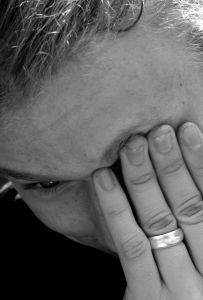
Frustration. Credit to Staci Beck

by The Chronic Chronicles | Aug 16, 2011 | Coping Methods, Daily Life
Health.com has written a list of twelve things you can do for someone in pain. It’s aimed at those with rheumatoid arthritis, but it would apply just as much to those with Fibromyalgia, as apparently those with Fibromyalgia tend to have a much higher level of pain, that’s constant in nature.
Some of the ones I like best include:
3) Slow Down. The lady describes going for walks with strangers, and they’d go at her pace, and allow her to lean on them at times.
I am very limited in walking now anyway, but back when I could walk, slowly and in pain, I was always grateful to those who slowed down for me, and allowed me to stop and rest without judgement. It’s so lovely complete strangers would do this, when I found it wouldn’t even occur to people very close to me.
4) Make a Bed. I’m lucky enough that I no longer have to do this as I have support in place, but at university when I had to change my sheets, it was something I dreaded. It left me in agony and I’d then collapse, exhausted for hours. I have since found this genius produce All Zipped Up – which simply has a zip all the way round to make changing it to so much easier. They would make excellent present. http://www.allzippedup.co.uk/
7) Learn and Believe. This would be my number one. I am so, so grateful to the people that take the time to google my conditions, and read about them. I’m very grateful to those that can even just give an approximation of what I actually have, as it’s more than 99% of my people around me can do. I really appreciate it, and it means a lot to me. It shows they care.
8) Make a Meal. Wow, yes. Again this is something so incredibly appreciated. Cooking can be one of the hardest things to do – a mixture of standing, repetitive moments and carrying heavy items. Chopping, peeling and slicing can be a nightmare. I would have appreciated this so much at university, when by my final year I lived off microwave meals as I didn’t have the energy to make anything else. If you know someone in pain that lives near to you and are cooking something up anyway, save them a bit!
Credit to alex27