by The Chronic Chronicles | Aug 15, 2013 | Access
In Britain we have pretty good disability discrimination legislation. It’s quite extensive and covers physical access, employment and more. The Disability Discrimination Act came into force in 1995 – eighteen years ago. It’s been updated and strengthened multiple times since then – in 1996, 1999, 2004 before it finally ceased to exist and was instead included in much broader legislation called the Equality Act 2010. This included seven different protected characteristics which included disability, and states that if two people with protected characteristics have conflicting needs, then the disabled persons needs comes first.
However, I believe there are two particular flaws with this legislation – the first is getting companies, building owners and service providers to pay attention, fully comprehend and implement the law.
The second flaw is around enforcement. I will cover this issue in the post ‘Why we’re losing the war on Disability Access.’
Access Made Easy:
1) Access is generally about common sense. This includes putting a little thought behind decisions such as the layout of shop, and quite simply treating people with disabilities like you’d wish to be treated. For example – many shops have hearing loop systems, but don’t turn them on, fix them when they break, or train staff how to use the system. If you put a blue badge space outside your shop door – don’t use it for storage instead! If you’re installing a ramp to help wheelchair users and those with mobility problems, don’t put it at the back of the building. The closer it is, the better. The law states that it’s not enough just to have an adaptation – but to make sure that it’s usable.
2) Access doesn’t have to be expensive. The law asks for reasonable adjustments, and does make allowances for cost. It wouldn’t be expected that a small shop knock their entire shop down to replace it with a fully accessible one, or to install a permanent ramp. There are always ways to improve access though – such as a lightweight ramp that can be moved, a doorbell placed outside to allow people to call for help if needed, a portable hearing loop system, etc.
3) Never underestimate staff training. I have never had decent Equality and Diversity training, despite working for a range of councils, charities, universities and private businesses. It’s usually a patronising online module that tells you nothing about what it’s like to be disabled. There are lots of different kinds of disabilities out there and stereotypes attached to them. Some are harmful, some are just assumptions. Some I’ve heard just in the last week include:
• Wheelchair users cannot walk at all because their legs don’t work.
• AHDH is a fad, and is just naughty-child-syndrome.
• If someone is deaf just shout at them.
• If your child has Autism, then you should just be a parent and watch them at all times rather than expect their environment to be made safe.
• Only older people can have mobility problems.
Staff that have good training are going to lessen the chance of causing offensive, having complaints made about them – and more importantly increase the chances of meeting the needs of the customer and getting them to return again.
4) Accessible shops, or places with good customer service will get more custom. Disabled people have money to spend too. And to me – a shop that could easily make adjustments and hasn’t says to me “you are not welcome.” It’s mostly because the shops in the town centre I live in is so hard to get around I moved to mostly online shopping.
A cafe in the town centre that is inaccessible to wheelchair users
A few months ago I wanted to buy a gift for someone, and only had one day to buy it. My problem, however, was that my wheelchair was out of action. I checked online to make sure it was in stock, and headed to Homebase. The item I wanted was a plant – so I hoped if I could park outside the door, and go straight to the plant display nearest the door, I might just make it. However, I couldn’t see the plant – so I staggered over to customer service, already way past my walking limit. I explained to the lady I couldn’t stand long and couldn’t find what I wanted. She immediately brought a chair round to me without asking, then went to find the item, rang it up and called for someone to carry it out to my car for me. It seems simple, but it was so rare to be treated this way it actually brought tears to my eyes, which I know is pathetic! I wrote to thank Homebase and the lady in question and hope all their staff are like that. Next time I need to buy something gardening related – I’ll head to Homebase.
It’s important to note – most people will not complain about the step in the doorway, the packed displays, the till they can’t reach – they just won’t return.
5) New builds – get it right! While there is a certain level of understanding that it’s harder for older buildings, if you’re creating a new public building then please make an effort. The town I live in recently opened a massive shiny new art facility that cost £28 million. I was therefore incredibly disappointed they got some really basic things wrong. There was a whole list of issues – but a couple of the problems included a disabled toilet with an automatic light that turned off after a minute. So the person had to get off the toilet, and go outside into the corridor to turn it back on, or have fun in the total darkness. The second was the disabled parking was blocked off by locked bollards. In order to park, a wheelchair user had to pull up in the road, get their wheelchair out, head the 30m or so into the building, find a member of staff, wait for them to unlock it, go back to the car, put the wheelchair back, drive into the space, and get the wheelchair back out again. (For for many non-wheelchair users the distance was too far to reach the building from the road.) It’s very frustrating when such basic things are done so badly.
Finally: 6) It’s the law so just do it!
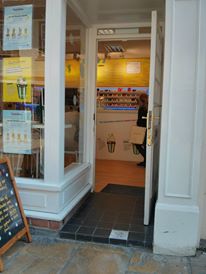
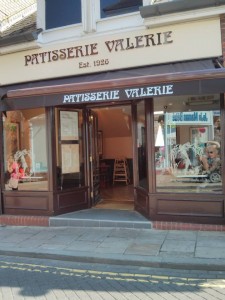
The staff in this shop ignored my attempts to gain access in my wheelchair. The manager later stated no one else had complained they couldn’t gain access. But how many people didn’t even try?
In terms of access, which simple changes would make your life easier?

by The Chronic Chronicles | Mar 27, 2012 | Access, Daily Life, Trips Out
One thing that still bothers me after all this time of having mobility issues, is the problems that visiting new places brings. I’ve just spent the weekend in London as a birthday/Mother’s Day treat for my mum.
Trips like this involve a lot of planning. One particular issue is finding close parking, but it’s pretty hard when London’s involved as it’s such a maze. Even having parking near enough doesn’t mean there will be dropped curbs, or that the wheelchair won’t get stuck, or the battery won’t run out, and many of these issues you can’t plan away.
On Sunday we went to the Ideal Home Show. Online a ticket was £14, but because we needed a carers ticket, you couldn’t purchase it in advance so we had to pay on the day – now £18. (Strike one!)
The Earls Court website informed us there was plenty of free blue badge spaces close to the entrance – great! This helps with the dropped curb issue (which doesn’t just happen in the middle of nowhere, it happens all over the place.)
We arrive to find a whole row of blue badge parking, except every single one is cordoned off. Not filled, which we’d just have to live with – just roped off for no reason. The car park is available though, they tell us with a smile, but it charges by the hour. Having a wheelchair takes a lot longer to get round things, so that added an extra £25 to our day. (Strike two!)
Credit to: edouardo
The car park is at the back of the building – so getting to the exhibition was quite the trek. (Strike three!) It would have been totally impossible without the wheelchair, so how ambulant disabled people coped, I don’t know. Actually, I do, having been to The Back Pain Show at Olympia recently, the same company as Earls Court, we found the parking at the back of the building and having to pass two other exhibitions to get to the right entrance, once of which being a wedding show. I’m not saying disabled people don’t get married, but one assumes more disabled people will be heading to the show about combating pain. We were hiring a wheelchair at the exhibition, but they hadn’t thought about bringing it round to us – so by the time we got there I was almost throwing up in pain.
Back at the Ideal Home, my wheelchair battery was playing up, and by the time we made it from the car park all the way there, I only had a tiny bit left. We headed straight to the top floor for lunch, as I worried about how the hell we were going to get around with minimal battery. We’d bought the charger with us, in case there was a spare plug, but they were all up too high to reach.
We spotted a tea room style area for lunch, and headed over. There was plenty of free tables at the back, but when I asked if there was a route for wheelchairs, we were met with a blank stare and told it would be a half hour wait for a table we could get to. (Strike four!) Instead we headed to an Italian styled cafe, which sold nothing Italian. We shared a sandwich, one packet of crisps and a drink each for £15. Ouch.
The layout of the exhibition was pretty good, with enough space to negotiate and view the stalls. A kind stallholder allowed us to charge my batteries while we tried out some pain relieving equipment.
I do have some rules regarding navigating with my wheelchair. It’s actually quite hard to steer, so I really appreciate those that step out the way. I really do. I avoid people as much as possible of course, and I do my best to halt for children. However, if you stop dead in front of me, or walk backwards into my path – you are fair game. Be warned. Plus, nobody needs to walk backwards, so why do so many people do it?!
Even with the space, having to constantly stop for people and wait to look at things, it took pretty much the whole afternoon to get around the top floor. By the time we got down to the actual ‘home’ section, we only had forty minutes to go. To be fair, we don’t have any money and don’t own our home – so kitchens, bathrooms, etc don’t interest us. And no, I don’t want to buy any goddamn solar panels.
The show homes were not wheelchair accessible, and seemed to only be accessed by stairs, which was a shame, as I’d have been interested to see them. (Strike five!)
We were both pretty exhausted by then, and tried to head to the exit. After going round in circles, we asked a member of staff the way out – one of which who grunted and pointed to the lift. We got out at the next floor after getting the wheelchair jammed in the lift due to it not stopping straight, which broke my footplate, only to be told we’d been on the right floor previously. The next member of staff we asked pointed vaguely, and again was wrong, and when we finally found the exit no one was there to operate the stairlift. When we called for help they said we had to find another exit. (Strike six!)
All in all – a tiring day, that wasn’t worth the money we paid, although we got some interesting bargains whilst in there.
Above all, I was disappointed such a big organisation hadn’t thought more about accessibility. Signs to the exit and signs for wheelchair access would have been helpful, and why an earth did they prevent access to so many disabled bays? Staff should be trained better as well. Lower-cost parking for blue badge holders would be very appreciated – many of us don’t have a choice but to drive there, or not come at all.

by The Chronic Chronicles | Mar 8, 2012 | Access, Employment/Work
My job offer is now formal – I’m so pleased.
I have a lot on at the moment. Our local council has decided to remove access to all the central, level blue badge spaces in the town centre and add more to the existing car parks on the outside of town. They are much too far for disabled people to walk to. For over a year as chairperson of the local access group we’ve been fighting the decision and trying to get them to come to a compromise, but they haven’t been interested. Yesterday they published the official order to make the changes, so I’m madly working on a response to the formal consultation.
My wrists have chosen now to flare up as well, which is making life quite difficult.
Credit to: Michel Meynsbrughen
www.prestonotes.c.la

by The Chronic Chronicles | Jan 6, 2012 | Opinion
I found out today that a group of people in Darlington have brought legal action against Arriva bus company for disability discrimination.
The buses have been refusing to allow people in wheelchairs on because pushchairs are there; not putting the ramp down for them; telling them they will be too heavy for the ramp; not stopping for them; or giving them abuse for trying.
In one case a young man waited in the snow for the last bus of the evening, which refused to let him on. When he started to challenge it, the bus driver turned round to the passengers and told them if they let him on the battery on his chair could explode.
Credit to Michal Zacharzewski
Pushchairs do NOT have priority. I know it’s not easy, but parents should fold their pushchair should a wheelchair need the space, as a disabled person can’t jump out of their chair and the wide space is put in specifically for disabled access, not for prams. (The exception is of course if either the child or parent is disabled themselves and so cannot do this.)
Lothian buses in Edinburgh have actually now banned non-foldable buggies (prams) and insist on them actually being folded if they get on. I can’t say I like the thought of people being left at a stop in any case, however hopefully once the policy is known about, people will make sure they purchase a foldable chair.
Certainly buses should be doing all they can to make themselves accessible for people with disabilities. Good on Darlington Association on Disability and Unity Law for fighting it!

by The Chronic Chronicles | Sep 8, 2011 | Access, Hospitals, Volunteering
I haven’t updated in awhile, because I think I’ve been in a bit mentally exhausted. I seem to have something on every day – whether it be medical, or the voluntary work I do for on disability access – I could do with a break, but the show must go on!
I had an assessment at the Royal Orthopaedic Hospital to see if they will accept me for their three-week inpatient pain management programme. It was a bit of a nightmare with my electric wheelchair wheel dying just as we got to the hospital, only for them to say we’d been sent to the wrong building anyway. I had to wait for a porter to get me – who came half an hour after my appointment time. I have to say my anxiety levels hit the roof and exploded through.
It does involve a shared ward which is quite a worry, as I can’t deal with light or noise and sleep very lightly, so other people snoring is a big worry and not being able to go to bed when I’m shattered as we have to be up at 7am which is going to cause loads of problems for me!
Credit to Melodi2
In other news our local council are making plans to make the High Street buses, taxis and motorcycles only. This is causing a lot of concern as this is the road a lot of blue badge holders park along to access the town. It’s also going to cause mayhem in all the rest of the town, as when one part closes it causes deadlock.
I’m on the committee of the local access group – just become acting Chair, in fact. I’m trying my best to get the council to reconsider, or even just to respond to my emails – without much luck. I was feeling a bit alone, until yesterday when there was a flurry of supportive emails from people including councillors. Then yesterday I made a speech at the local cabinet meeting on the issue – which is quite funny, as I’m the person that skipped most of English in year 9 to avoid giving a talk, but it went pretty well.
It seems to have made some difference with the right people getting involved now. So here’s hoping we can make a bit of a difference here.